
How Personal AI Agents Are Transforming Business Productivity and Workflows
The way work gets done is evolving faster than many businesses realize. Today’s competitive landscape demands not only new tools but smarter ways of integrating technology into everyday processes. One of the most promising shifts is the rise of sophisticated personal AI agents, digital assistants built to proactively manage tasks, connect disparate systems, and serve as embedded collaborators across workflows.
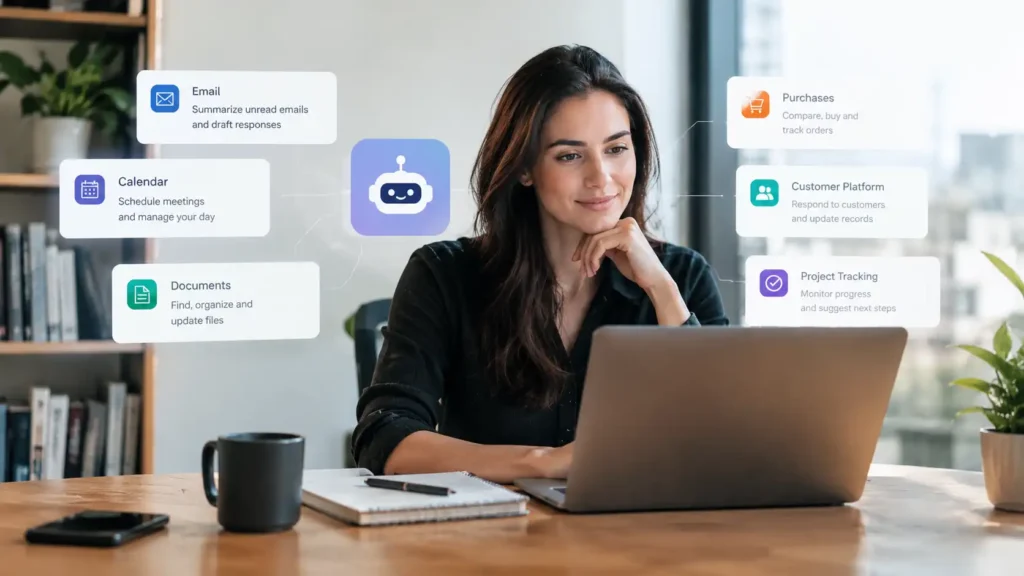
Unlike traditional chatbots or simple assistants that respond passively to requests, these AI agents act autonomously, working quietly in the background to take meaningful actions. They don’t just answer a question. They navigate the web, fill out forms, schedule meetings, make purchases, and keep track of your goals without constant oversight. This transition from reactive tools to proactive agents profoundly changes what’s possible in daily business operations.
For businesses, the implications are substantial. Many workflows remain burdened by repetitive, manual steps, data entry, cross-system updates, appointment booking, and multi-stage approvals, that consume valuable time and introduce inefficiency. Personal AI agents can automate these busywork elements seamlessly, freeing employees to focus on higher-value activities. Imagine handing off the coordination of multiple systems, email, calendar, customer platforms, and procurement, to a trusted virtual assistant that learns your preferences and priorities.
This level of integration unlocks new agility. AI agents can monitor progress on projects, surface suggestions based on patterns they observe, and orchestrate complex sequences of actions across apps without human intervention. They can build custom tools on demand when standard integrations don’t exist, ensuring that evolving business needs aren’t stymied by technical gaps.
Security and control remain core concerns with personal AI agents. Advanced solutions separate sensitive credentials, require user approval for actions like purchases or messaging, and maintain transparent audit trails. These guardrails build the trust necessary for businesses to confidently adopt autonomous AI assistance without sacrificing privacy or oversight.
In practice, adopting personal AI agents encourages a shift from rigid workflows to dynamic, adaptable processes. Instead of forcing employees to toggle between systems or perform repetitive tasks, businesses can design workflows that engage AI agents as proactive collaborators, anticipating needs, managing routine activities, and escalating only the decisions that require human judgment.
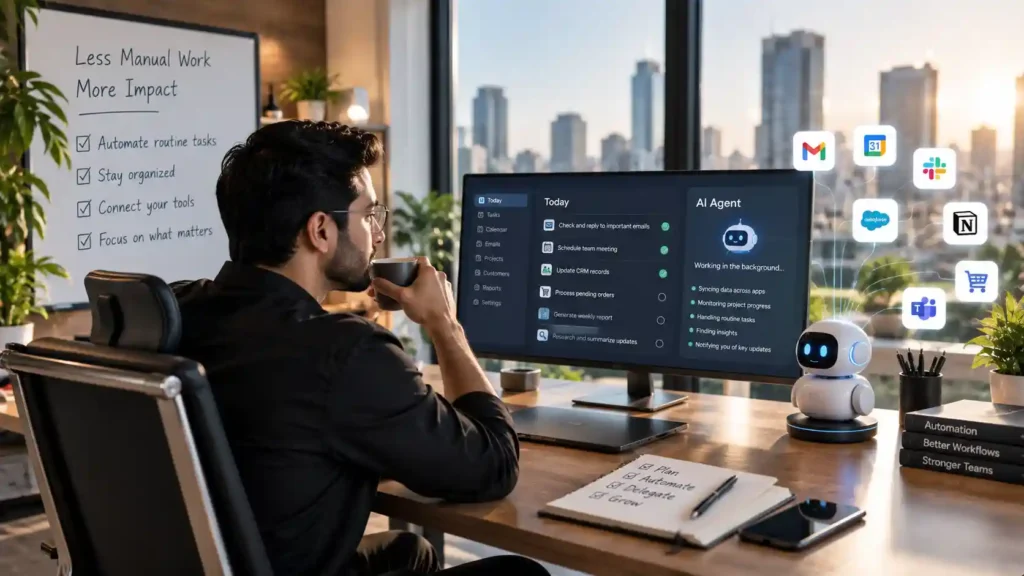
Businesses considering this shift should focus on identifying routine pain points ripe for automation and envisioning where an AI agent could bridge process gaps. The technology is not about replacing people but amplifying their impact, enabling teams to accomplish more with less friction while reducing error and latency.
At Manisoft Solutions, this technology shift aligns with the broader opportunity we see in crafting custom AI-powered software that molds to specific business contexts. Personal AI agents are most powerful when embedded into integrated workflows designed around real-world use cases rather than off-the-shelf tools. Developing tailored automation around these agents creates practical transformation, not just theoretical promise.
Ultimately, personal AI agents represent a paradigm shift, a move from static automation toward a living digital partner that learns, adapts, and acts on behalf of the business. Embracing this new model can redefine productivity, streamline operations, and secure a meaningful competitive advantage in an AI-accelerated future.
Let’s Build This Together
At Manisoft Solutions, we help businesses turn ideas like this into practical software, AI, and automation solutions. If you see an opportunity to apply this kind of technology to your business, Get a free consultation and let’s talk.