
Why AI Coding Agents Expand Your Security Risk, and What to Do About It
The promise of AI-powered coding assistants is undeniable. They accelerate development by intelligently understanding projects, suggesting improvements, and automating routine tasks. But with this convenience comes a new dimension of security risk that often goes unrecognized , the repository itself.
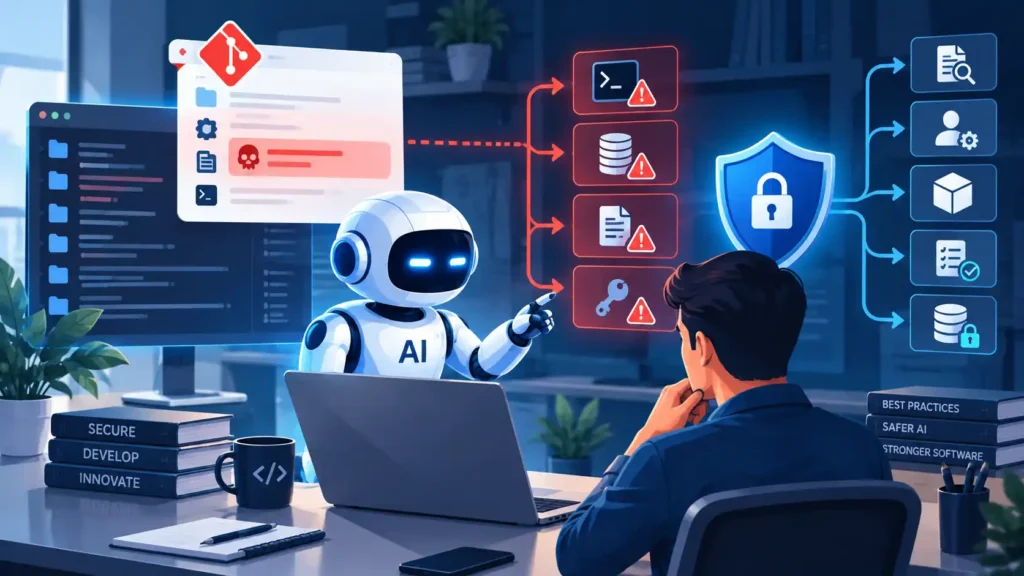
For years, the rule “don’t run code from untrusted repositories” has guided safe software development. Yet AI coding agents shift the terrain. They don’t just passively read code , they actively engage with repositories, interpret instructions, configuration, and even run tools that may be embedded in the project. What looks like simple source files can contain malicious commands or scripts that influence how these agents behave, silently turning the repository into an attack vector.
This matters because AI agents operate with elevated privileges , accessing tooling, system resources, and sometimes sensitive credentials on your behalf. When these agents open an unfamiliar project, malicious configurations can trigger harmful actions during what seem to be routine operations. Unlike traditional manual code execution, where a developer consciously runs suspicious code, AI agents may unknowingly execute harmful instructions embedded within the project’s setup.
How Repositories Can Become an Attack Vector
Examples of this risk have emerged from recent security research exposing how malicious Git configurations can hijack AI coding agents. Attackers can exploit Git performance features to execute unauthorized code under the guise of normal repository inspection commands. Moreover, repositories can contain “agent skills” , bundles of custom instructions and scripts intended to extend AI capabilities , that if not reviewed carefully, act like hidden malware, manipulating AI behavior through prompt injection or other deceptive tactics.
The business impact is significant. A compromised AI agent can lead to codebase tampering, leakage of sensitive credentials or intellectual property, and disrupted development workflows. This threatens not only project integrity but also overall organizational security.
Practical Steps for Safer AI Coding Automation
So, how can businesses safely reap the benefits of AI coding automation without falling prey to repository-based attacks? Here are practical steps practitioners should consider:
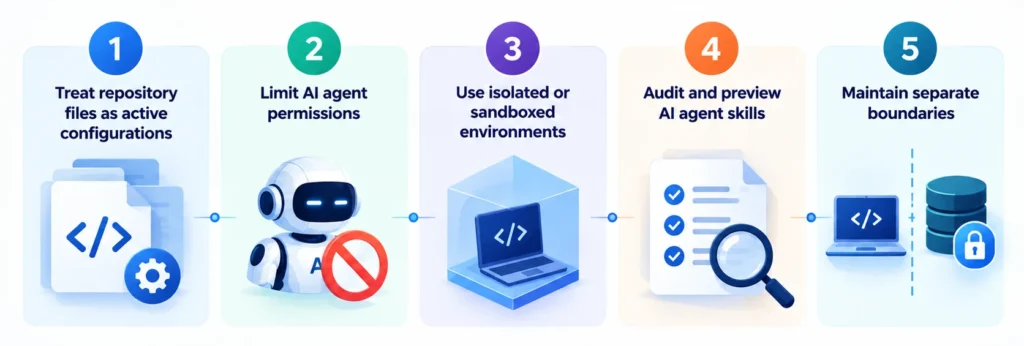
- Treat repository files as active configurations, not just code. Any file that influences how an AI agent interprets or operates should undergo the same scrutiny as executable code. This includes agent-specific skills, configuration files, scripts, and markdown files with embedded instructions.
- Limit AI agent permissions aggressively. Avoid giving coding agents access to production credentials, cloud resources, or sensitive tokens unless absolutely necessary. Applying the principle of least privilege reduces potential damage if an agent is compromised.
- Use isolated or sandboxed environments for unfamiliar repositories. Containers, virtual machines, or restricted workspaces can contain the blast radius of any unexpected execution triggered by the AI agent.
- Audit and preview AI agent skills before integration. Since skills can contain scripts and automation pipelines, reviewing their content helps prevent inadvertent execution of malicious instructions.
- Maintain separate boundaries between the development environment and sensitive data. Ensure that secrets like API keys and tokens are not exposed to AI agents unless their role mandates it.
Extending Security Beyond Code
In essence, securing AI coding agents means extending supply chain security awareness to include not just code libraries, but the entire repository ecosystem that these agents interact with. Just as developers have grown cautious about installing third-party packages, they must now be equally vigilant about what repositories instruct AI agents to do.
From a broader perspective, integrating AI capabilities into software development amplifies the need for disciplined security practices tailored to this new form of automation. Organizations that acknowledge this shift and proactively address it are better positioned to leverage the productivity of AI while safeguarding their software assets.
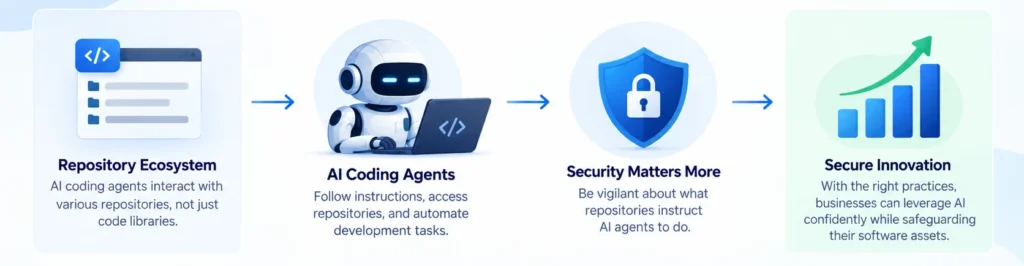
At a practical level, the key insight is that technology’s value emerges when it aligns with rigorous workflows and real-world business needs. AI coding agents are powerful tools but require thoughtful security frameworks to become sustainable advantages rather than emerging risks. Thoughtful management of these risks enhances trust in AI automation and opens pathways for innovation with confidence.
Ultimately, the right mix of education, permissions management, sandboxing, and policy review helps businesses integrate AI coding agents as secure collaborators rather than hidden vulnerabilities in their software development lifecycle.
Let’s Build This Together
At Manisoft Solutions, we help businesses turn ideas like this into practical software, AI, and automation solutions. If you see an opportunity to apply this kind of technology to your business, Get a free consultation and let’s talk.