
Unlocking Efficiency with AI-Driven Benefits Administration Software
Managing employee benefits has long been a complex and error-prone process, burdening HR teams with repetitive tasks and demanding precise compliance.
The challenge lies not only in the volume of data but in the necessity for accuracy and regulatory adherence. This creates inefficiencies that ripple through the organization, from delayed enrollments to employee dissatisfaction and costly administrative overhead.
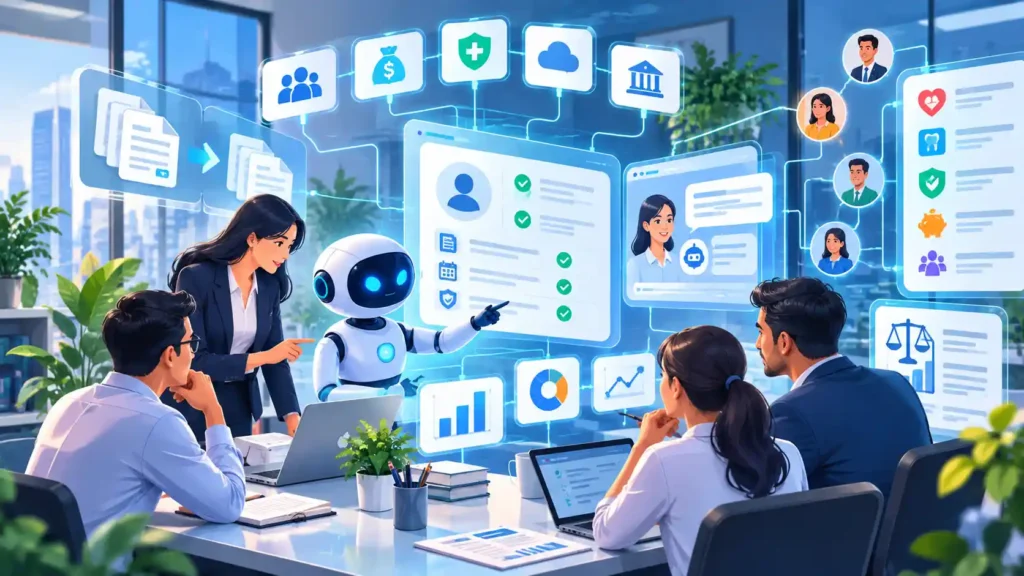
A fundamental shift is underway. AI-powered benefits administration software is emerging as a transformative solution that combines the rigor of deterministic business rules with the agility of artificial intelligence. This blend addresses the core pain points while extending capabilities beyond traditional automation.
AI and Business Rules
The critical innovation is in the architecture: separating concrete eligibility rules and payroll calculations from AI’s probabilistic functions like plan explanations, support triage, exception detection, and data interpretation.
This architectural separation ensures business logic remains consistent and auditable, while AI accelerates interactions and reduces manual workload.
For businesses, this means that routine eligibility checks and enrollment updates remain reliable and traceable, while AI enhances employee engagement through personalized guidance and rapid answers to complex benefits questions.
The result is faster response times, fewer errors, and less reliance on specialized HR intervention.
Integration and Connectivity
Successful adoption depends heavily on integration. Benefits software must seamlessly communicate with HR information systems, payroll platforms, insurance carriers, identity providers, and vendor services such as COBRA and health savings accounts.
These connections ensure data flows reliably and securely across systems, enabling real-time updates and reducing reconciliation headaches that often delay processing.
Integration complexity is a major driver of cost and implementation time. Enterprises often encounter bottlenecks around carrier connectivity, where legacy interfaces demand additional reconciliation and manual oversight.
This underscores the importance of choosing solutions built on modern, flexible architectures with robust API support complemented by fallback mechanisms like secure file transfers.
Compliance and Governance
Another layer of consideration is compliance and governance. As AI participates in interpreting plan documents or prioritizing exceptions, businesses must maintain clear audit trails, human review processes, and access controls to ensure regulatory obligations are met.
This focus on transparency and accountability is essential not only to manage legal risk but also to build employee trust in automated systems.
Beyond the technology itself, total cost of ownership extends far beyond subscription fees. Integration efforts, ongoing maintenance of carrier feeds, compliance safeguards, and operational handling of discrepancies all contribute to the investment.
Planning must include these factors to avoid underestimating the true resource commitment required.
Build or Buy
From a strategic perspective, the decision to build or buy AI benefits administration software hinges on business differentiation.
Enterprises with unique workflows or complex carrier relations may find value in custom-engineered platforms.
Others benefit more from extending proven SaaS solutions with adaptable AI layers designed to fit standard processes.
Transforming HR Workflows
The broader opportunity lies in transforming back-office HR processes into seamless, efficient digital workflows that enable HR teams to shift focus from routine administration to strategic employee support.
AI benefits administration software, when thoughtfully integrated and governed, bridges that gap by delivering scalability, accuracy, and an improved user experience.
We see the bigger opportunity in recognizing that AI is a tool best leveraged within a clearly defined system architecture and integration framework, rather than a catch-all solution.
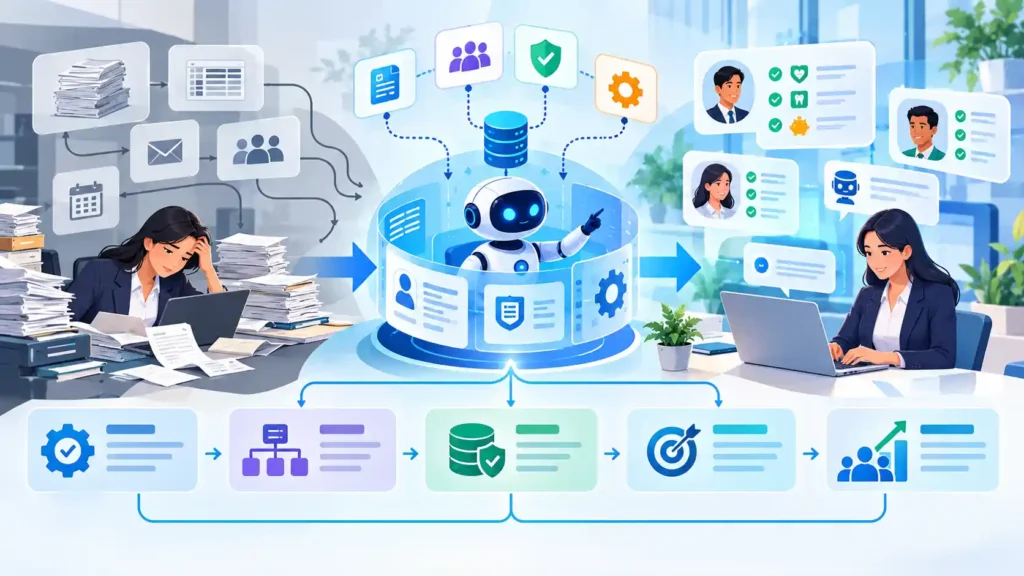
When paired with robust business rule engines and solid data governance, AI drives measurable improvements in operational efficiency and employee satisfaction.
Technology becomes truly valuable when adapted to real workflows, compliance requirements, and integration realities.
This holistic perspective is how automation moves from a promising concept to a practical enterprise solution that fuels digital transformation in HR and beyond.
Let’s Build This Together
At Manisoft Solutions, we help businesses turn ideas like this into practical software, AI, and automation solutions. If you see an opportunity to apply this kind of technology to your business, Get a free consultation and let’s talk.